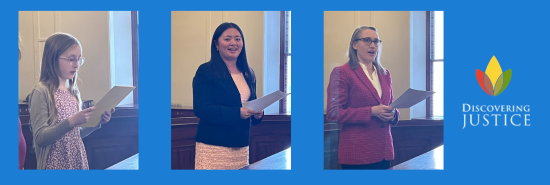
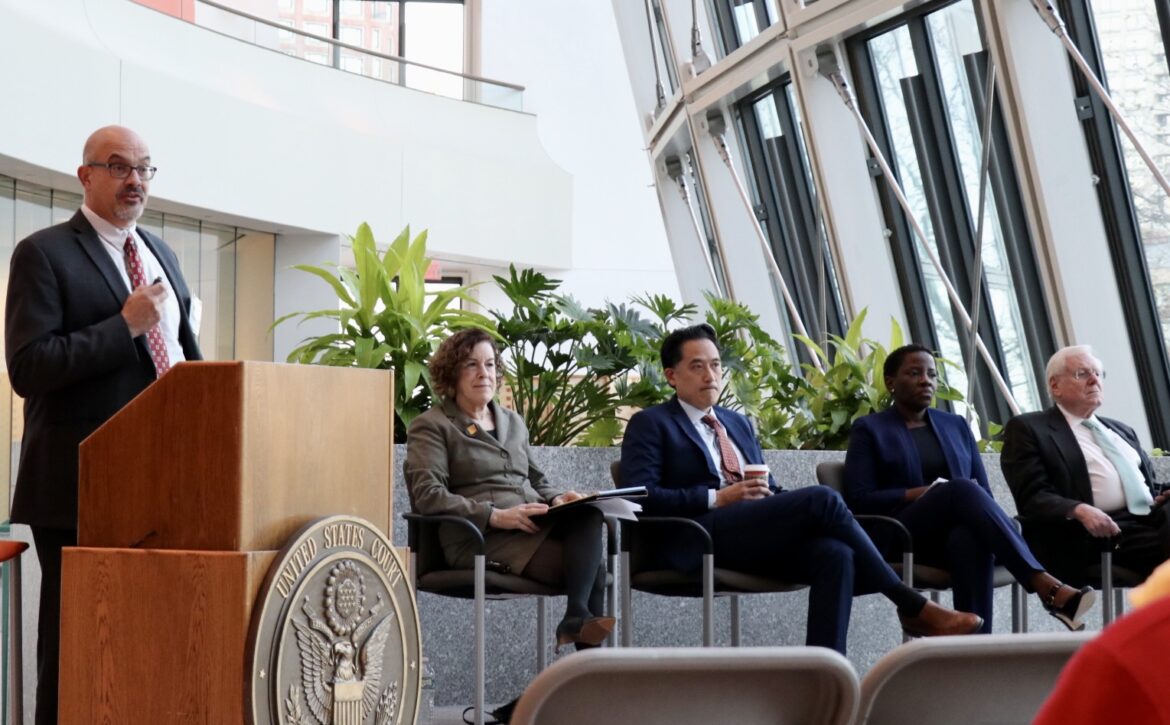
At a March 13th briefing organized by Discovering Justice, an audience of 60 Massachusetts legislators and their staff gathered in the Massachusetts State House to hear students and teachers speak on the importance of the state’s continued investment in civic education.
Traveling to the State House from Cambridge, Fitchburg, North Andover, and North Attleboro, students aged from fourth to twelfth grades and their teachers presented their stories of the transformative power of civic education.
After learning about civics at school, North Attleboro High School senior Meagan Lee reports that “I am inspired to speak up about the needs of the community and believe I have the power to have an impact.”
Hard work remains to keep the Legislature engaged in supporting and investing in civic education in MA classrooms. Speakers urged the Legislature to level-fund and maintain the Civics Project Trust Fund. The Trust Fund is used by state education officials to develop civic education curricula and professional development for teachers and is also granted out to school districts to develop local civic education capacity.
However, those dedicated to the cause are unwavering in their convictions – like Representative Andy Vargas (D-Haverhill), the first guest to speak at the event, reminding the room that “Civics education empowers students across the Commonwealth to realize they have agency to make change.”
And, as Cambridge fourth grader Galina B. attested, “Civics has empowered me to see that I can change the world, one project at a time.”